
The Association of Healthcare Providers - India (AHPI) has withdrawn its earlier order that would have suspended cashless facility for policyholders of Bajaj Allianz General Insurance and Care Health Insurance at member hospitals, CNBC-TV18 reported. The reversal comes after fresh talks between the association and the two insurers, but the underlying friction - delayed reimbursements, tariff disagreements, and shifting claim rules - has not gone away. For hospital owners, the episode is a reminder that TPA cashflow is not a back-office problem: it is a front-line operational risk.
AHPI represents roughly 15,000 hospitals across the country. Earlier this month it had asked member hospitals to stop offering cashless treatment to Bajaj Allianz and Care Health policyholders, citing unilateral tariff cuts, delayed dues, and claim denials that pushed the working-capital burden onto providers. The revocation, reported by CNBC-TV18, restores cashless access - but only for the moment. Two things follow from that. First, any hospital that told patients "cashless is off" over the last few weeks now has to reverse that message across its call centre, admissions counter, and OP registration desk without confusing families who have already scheduled surgery. Second, the discharge queue on Monday morning will include patients whose approvals were paused, restarted, or partially processed - each one needing a case-by-case review before the bill is finalised. Neither of those is a paperwork problem. Both are throughput problems that show up in average length of stay, bed turnaround, and receivables ageing within the same week.
A 200-bed hospital running at 70% occupancy with an average bill of Rs 60,000 and 55% insurance mix carries roughly Rs 4.6 crore of cashless receivables at any given point. When a large insurer's cashless is disrupted - even for a fortnight - three things happen at once. The payment mix shifts to reimbursement, which means the patient pays upfront and files later; a portion of scheduled elective admissions defer or reroute to a competitor; and the finance team has to open a manual reconciliation track for cases that started as cashless and ended as reimbursement. Even after AHPI's reversal, insurers typically take 4 to 8 weeks to normalise turnaround on stuck cases. That interim period is where hospitals with poor TPA workflow discipline start missing salary cycles, delaying vendor payments, or dipping into overdraft. The MDs who came through the 2024-25 tariff standoffs largely credit two things: a clean claim submission process and real-time visibility into which cases are stuck at which stage.
Most 100-500 bed hospitals in India still run TPA coordination on a mix of email, WhatsApp, and a shared Excel sheet. The break points are predictable. Pre-authorisation requests go out with incomplete clinical notes and get queried, wasting 24-48 hours. Enhancement requests during the stay are triggered too late, so the patient is already discharged before the approval lands. Final bills go out with tariff codes that do not match the empanelment contract for that specific insurer, triggering short-payment. Denial letters sit in the TPA desk's inbox without a re-submission SLA. Every one of these is fixable, but only if the HIS treats the insurer as a first-class entity rather than a payer name in a billing dropdown. That means the empanelment contract, the tariff, the pre-auth template, the query history, and the payment ageing all sit against the insurer record - and the admissions clerk sees the right template the moment she picks Bajaj Allianz or Care Health, not the generic one.
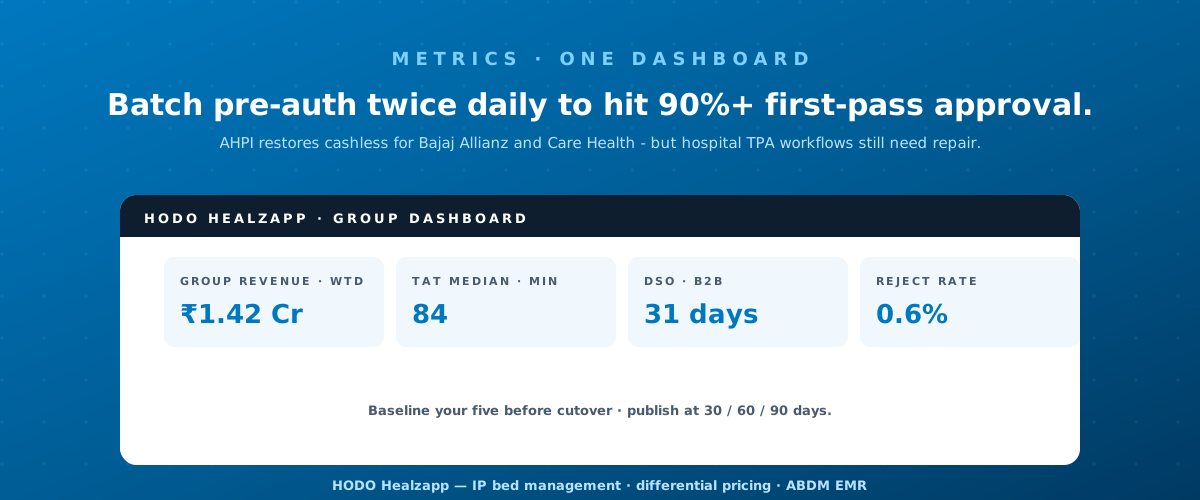
The fastest operational win from an episode like this is tightening pre-authorisation. Hospitals that hit consistent 90%+ first-pass approval share three habits. They batch pre-auth submissions in two windows a day rather than sending one at a time, which lets the TPA desk work through a queue instead of context-switching. They tag every case with the treating consultant's dictated indication in the same submission - not a separate follow-up - so the insurer's medical officer does not have to query. And they track query response time as a KPI at the desk level, not the hospital level, so a single clerk falling behind is visible before it becomes a receivables problem. None of this requires new software if the hospital is on a modern HIS. What it requires is that the pre-auth workflow, the EMR note, and the billing tariff all sit in the same system and update each other, so an enhancement raised bed-side by the resident on Sunday night does not need the TPA desk to re-key it on Monday morning.
AHPI's reversal is temporary relief, not a settlement. The next standoff - with a different insurer, a different set of tariff codes, or a different regulator letter - is a matter of when, not if. Hospitals that want to be resilient should do three things this quarter. Segment receivables by insurer and by ageing bucket, and treat anything past 60 days as a recovery case with a named owner, not a line in a report. Renegotiate empanelment contracts with a clause on maximum query-response and payment-release timelines, so a future dispute has contractual teeth. And separate the OP and IP TPA queues operationally - OP diagnostics and consultations often get lost inside an IP-heavy TPA desk, and that is where the small-ticket, high-volume receivables silently pile up. A chain running multiple outlets should also review whether each centre is empanelled with the same insurers on the same tariffs, because inconsistency between outlets is a common source of denial when patients move between centres of the same brand.
Hospitals on HODO Healzapp already have the plumbing to run the discipline described above. The Billing module holds insurer-specific tariff sheets and applies them at the point of order entry, so the tariff mismatch that triggers most short-payments is caught before the bill is submitted. Corporate-partner logins extend the same workflow to TPAs and corporate empanellers, giving them a direct portal to pull pre-auth documents and reducing the email back-and-forth that eats query response time. Differential pricing lets a hospital maintain distinct rate cards per insurer, per corporate, and per outlet - so an AHPI-versus-insurer standoff on one payer does not force manual re-pricing across the book. Together these three keep the receivables clock ticking on the insurer's side of the table, not the hospital's. See how Healzapp handles this - book a 30-min demo.
See how Healzapp, Labzapp and EReazy fit your speciality in a free 30-minute demo.
Book a Free Demo