
Dr Lal PathLabs has acquired Mumbai-based Suburban Diagnostics, as reported by expresshealthcare.in. For diagnostic-chain owners and MDs across the country, the interesting question is not the deal value — it is the operational integration that follows, where cost synergies are either captured in the first 90 days or lost for good.
Suburban is one of the strongest independent lab brands in western India, with a heavy presence in Mumbai, Pune and parts of Gujarat. Dr Lal, headquartered in Delhi NCR, has been steadily buying regional depth after the post-COVID normalisation of test volumes squeezed organic growth. This is the third meaningful acquisition in the listed-lab space in eighteen months, and it confirms what most owners of 20–200 collection-centre chains already suspect: the mid-tier is being consolidated. Regional chains that once fought each other for referral-doctor loyalty are now either buying, being bought, or preparing to be. For a diagnostic-chain administrator reading this, the practical read is that valuation multiples in the next round of deals will be driven less by branch count and more by defensible unit economics — cost per test, TAT per specialty, and the ability to onboard a new outlet without a three-month IT project. Chains that can prove those numbers on a dashboard get better multiples. Chains that cannot, get discounted.
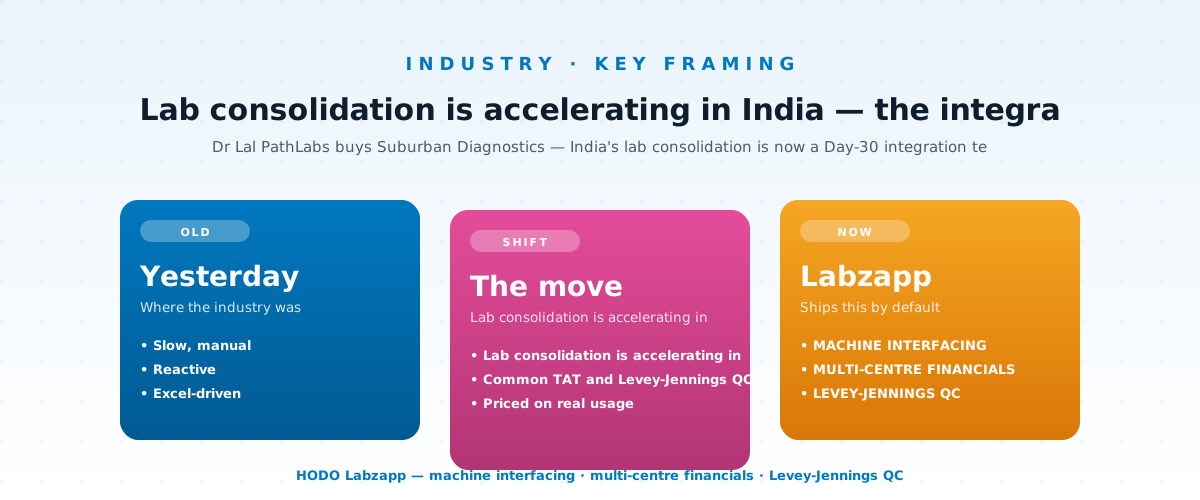
The first operational shock in any lab acquisition is variance. The acquirer's SOP for a CBC in Delhi is not the acquired chain's SOP in Pune. Instrument calibration schedules differ. QC pass rates differ. The reporting template that a Mumbai clinician has read for a decade is suddenly replaced by a new one, and referral doctors quietly start sending samples elsewhere. Most first-year revenue leakage in acquired lab chains traces back to this — not to price cannibalisation, but to broken referral trust. Owners planning either side of a deal should insist on a Levey-Jennings QC dashboard visible across every acquired branch from Day 1, not Day 90. Turnaround-time reporting must be common, comparable and specialty-wise, because an aggregate 'average TAT' number hides the specialty where the referring doctor actually cares. Without those two dashboards live from the first week, the integration team is flying blind and the promised synergies stay on the pitch deck.
The second shock is physical. Suburban has strong home-collection volumes; Dr Lal has a national logistics grid. Merging the two means every sample now needs an identifier that survives from a phlebotomist's bag in Bandra to an analyser in a central processing lab in Powai, and eventually onto a doctor's WhatsApp screen. Barcoded samples with end-to-end machine interfacing are no longer a nice-to-have — they are the only way to prevent sample mix-ups when volumes double overnight. Every acquired instrument, from haematology analysers to biochemistry to immunoassay, has to talk to the parent LIMS without a lab tech re-typing values. Chains that still run partial machine interfacing typically discover, after a merger, that 15–20% of their tests are silently being manually punched, which is both a QC risk and a payroll cost the CFO does not see until the first post-integration audit. This is the layer where technology choice stops being a vendor discussion and becomes a valuation input in the next round.
The third shock is relationships. Suburban, like every regional chain, runs on referral-doctor loyalty and B2B partner-lab arrangements — outsource work sent from smaller labs, corporate wellness contracts, and a book of consultants who trust specific pathologists. A merger typically triggers a re-paper exercise on all of it: new MOUs, new pricing, new report headers. Any of these can be the trigger for a partner to test a competitor. The mitigation is continuity of login, continuity of pricing structure, and anonymised sample tracking for outsourced work — so that a partner lab in Nashik that sends histopath to the central chain sees the same portal, the same TAT clock and the same differential pricing tier on Day 91 as they did on Day 1. Referral-doctor portals with per-doctor login and per-corporate differential pricing become the retention tool. Chains that have this infrastructure in place absorb acquisitions cleanly. Chains that don't, spend the first year rebuilding what the acquired brand had already earned.
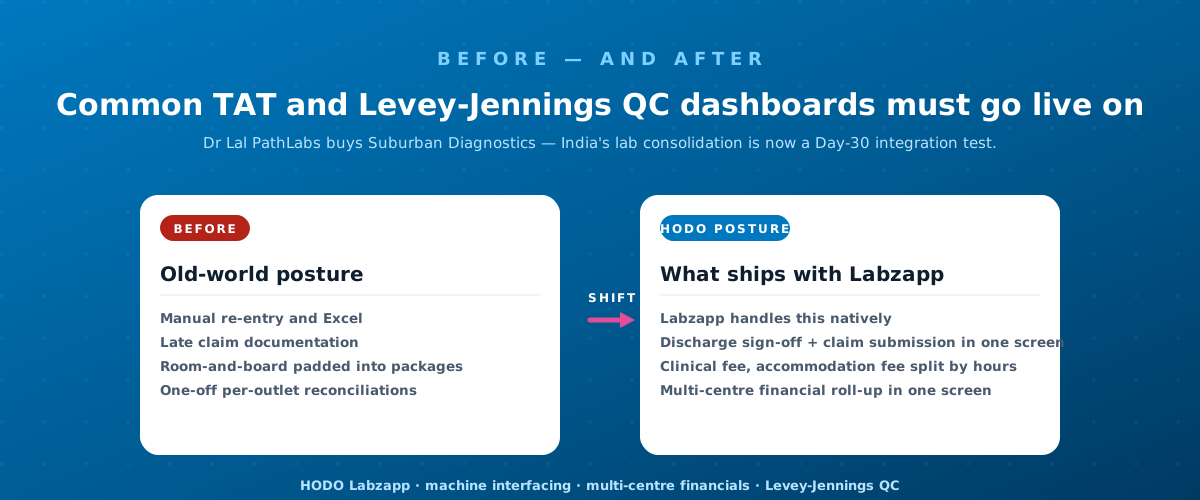
Every diagnostic-chain acquisition in India now has the same slide in the integration deck: 'Do we migrate them to our LIMS, keep them on theirs for 18 months, seek both certifications, or run two systems in parallel?' All three options are painful, but the parallel-system route is where most synergies leak. The right question at the vendor-selection stage — long before a deal — is whether the LIMS can multi-tenant a new brand or new geography without a fresh implementation. Multi-centre financial consolidation, franchisee management, and one-click new-centre setup are the features that decide whether the CFO can produce a consolidated P&L in month one or month twelve. Cloud hosting (Google Cloud Platform in HODO's case) removes the 'which datacentre' negotiation entirely. These are unglamorous checklist items until the day a deal closes, and then they become the only things that matter.
For diagnostic and pathology chains running HODO Labzapp, the Dr Lal–Suburban deal is a useful stress-test question: if a similar transaction landed on your desk tomorrow, is your LIMS ready? Barcoded samples with machine interfacing keep sample integrity intact when volumes surge across newly-acquired centres. Levey-Jennings QC and TAT reporting give the integration team the two dashboards that decide whether cost synergies are real or notional. Partner-lab integration with anonymised sample tracking, referral-doctor portals and per-partner differential pricing keep the relationships that make an acquired brand worth its multiple in the first place. Chains built on these layers scale from 20 outlets to 200 without a fresh IT project each time.
See how Labzapp handles this — book a 30-min demo.
See how Healzapp, Labzapp and EReazy fit your speciality in a free 30-minute demo.
Book a Free Demo