
Livemint reports that IRDAI is pushing to launch a nationwide unified cashless network in which every health insurance policyholder can walk into any empanelled hospital and settle bills without out-of-pocket outlay. For hospital owners and administrators, that headline is less about patient convenience and more about the operational chain — pre-auth, discharge summaries, reconciliation, and DSO — that will have to hold up under a much higher volume of cashless traffic.
The current cashless arrangement is fragmented: each insurer maintains its own empanelment list, its own portal, its own turnaround discipline, and its own claim format. A patient walking into a mid-sized hospital in Kochi or Coimbatore today may or may not be covered cashless depending on which insurer signed which contract with which TPA — and finance teams spend hours a day working the difference. IRDAI's proposed unified network flattens that. Any policyholder, any empanelled hospital, one workflow. That is the political promise; the operational implication is that hospitals will see a jump in the share of bills routed through cashless rather than reimbursement, and the whole back-office chain that sits behind pre-authorisation will get stress-tested in a way it has not been before. Hospitals still treating cashless as a side channel will find it becoming the main channel within eighteen months.
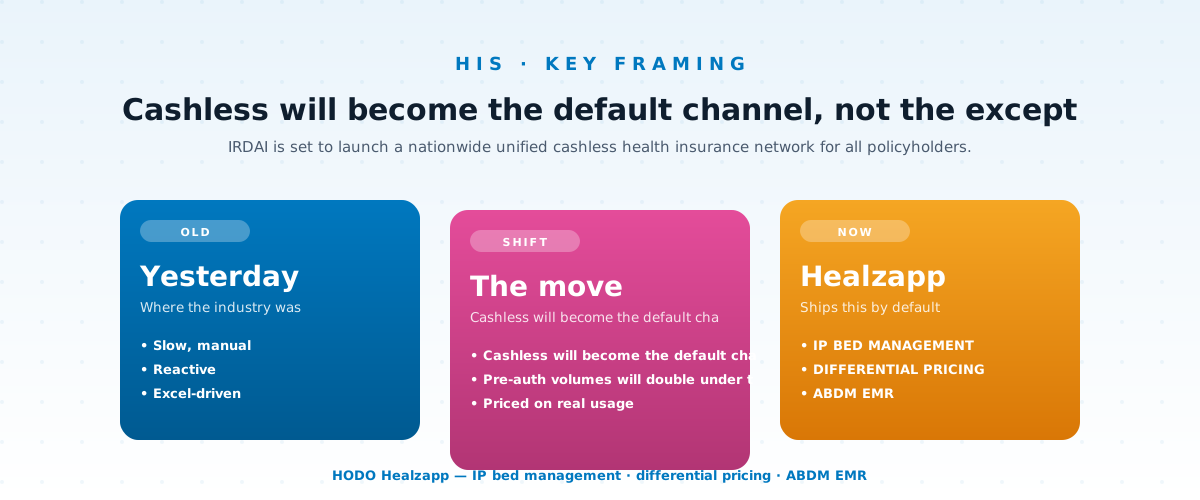
When cashless becomes the default, the bottleneck shifts from insurer-side approvals to hospital-side documentation. A pre-auth request needs a clean provisional diagnosis, ICD codes, estimated bed-days, package or itemised costing, and often the treating doctor's notes — and it needs to travel to the insurer within an hour of the patient's admission. Hospitals that today handle 30 to 40 pre-auths a day may see that double. If the front-office relies on physical file movement between admission, doctor, billing, and TPA desk, the queue will lengthen visibly. The operators worth watching in the next twelve months will be the ones who have connected admission, EMR, and billing into a single flow so that the pre-auth packet builds itself from data already captured at admission and consultation. Manual re-keying between systems is the failure mode that will start showing up in denial rates.
Cashless discharge in India routinely takes four to eight hours. That number is a symptom, not a cause: it is what happens when final bills, discharge summaries, pharmacy returns, and insurer approvals move through separate systems and get stitched together by phone calls. Once cashless volumes go up, the patient-experience gap between hospitals that clear discharge in ninety minutes and those that take a working day will get much more visible on Google reviews and referral patterns. Owners should measure it now — median cashless-discharge TAT, 90th percentile, and denial rate — and set a target for the next quarter. Anything above three hours is going to look uncompetitive by the time the unified network is live. The hospital that publishes its median cashless-discharge time on its website will win the corporate-tie-up conversation.
A unified network means fewer portals to log into, but more standardisation on the hospital side. Insurers will expect structured data — ABDM-compliant discharge summaries, standardised procedure codes, clean itemised billing — because that is the only way a common backbone can settle claims quickly. Hospitals still keeping paper case sheets or PDF-based discharge notes will find their claims routed to slower manual review. The hospitals that have already digitised the EMR, tagged procedures against a master, and pushed structured records into the health information exchange will get paid faster, and their denial rate will drop. This is where the ABDM investment that many hospitals made grudgingly starts paying back — the unified cashless network will effectively reward structured data and penalise ad-hoc documentation, even if IRDAI does not say so out loud.
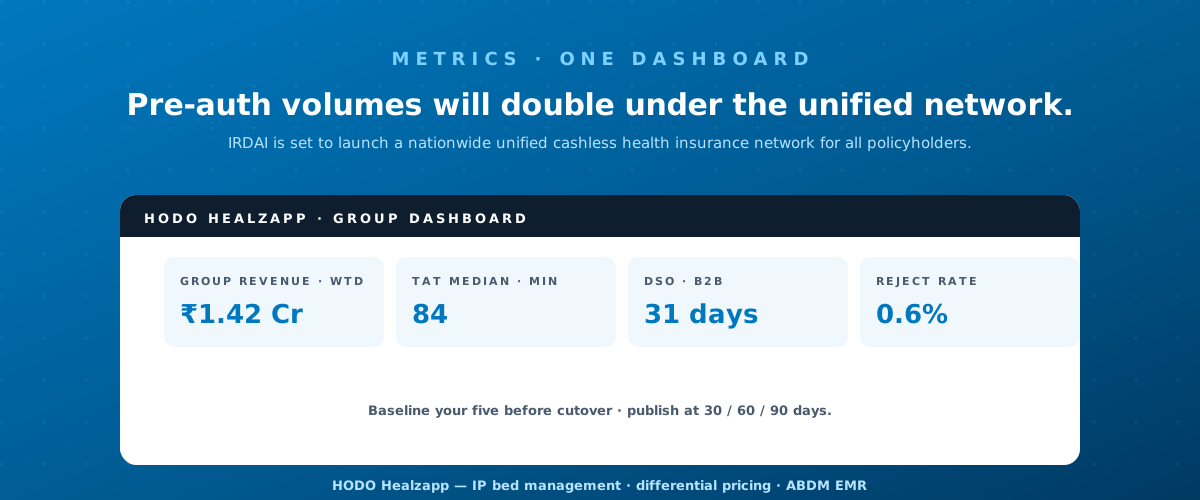
Finance teams should model what happens if cashless share of revenue moves from, say, 35 per cent to 60 per cent over the next eighteen months. Days sales outstanding stretches unless collections keep pace. Denial management stops being a monthly clean-up job and becomes a daily desk. Reconciliation across TPAs, insurers, and the hospital's own ledger needs to happen at line-item level — settled amount, disallowed amount, reason code — not just at bulk-transfer level. Hospitals still reconciling in Excel will bleed working capital. The ones with billing integrated to accounting, with denial reasons tagged and tracked, and with a dashboard showing outstanding by insurer, ageing bucket, and reason will hold their cash cycle steady even as volumes shift. Tally-integrated billing stops being a nice-to-have and becomes the audit trail the CFO needs to defend cashflow projections.
A chain of clinics or a hospital with three or four units cannot afford to have each outlet negotiate its own cashless workflow. Central credentialing, central rate cards, central pre-auth desk with local visibility — these become the operational spine. If the group's HIS handles each unit as a silo, insurers will see inconsistent documentation from the same brand, and settlement will drag. Chains adding a fifth or sixth outlet in the next year should treat unified cashless readiness as part of the launch checklist, not a retrofit six months later. The unified network will also change how new outlets get empanelled. Under the current model, each new unit had to run its own credentialing cycle with every insurer — a six- to nine-month drag on cashflow. If the unified backbone truly means one hospital identity across insurers, that drag shrinks, but only for hospitals whose data is already consistent unit-to-unit.
The unified cashless network is not a feature the hospital installs; it is a load the hospital has to survive. HODO Healzapp is built for the operational chain this news hook targets. The Billing module ties admission-side estimates, itemised charges, and TPA workflows into one ledger so pre-auth packets and final bills come out of the same source of truth, which is what shrinks discharge TAT and keeps denial reasons visible at line-item level. The ABDM-compliant EMR means discharge summaries and clinical notes leave the hospital in the structured format the unified network will expect, cutting the denial rate that manual PDFs invite. And Multi-outlet scale-up with one-click new-centre setup keeps documentation, rate cards, and TPA workflows consistent as new units come online, so a chain's fifth outlet is not treated as an unknown counterparty by insurers. Owners planning for the next eighteen months of cashless growth should map their current workflow against these three points before insurers do it for them.
See how HODO Healzapp handles this — book a 30-min demo.
See how Healzapp, Labzapp and EReazy fit your speciality in a free 30-minute demo.
Book a Free Demo