Healthcare is changing faster than the systems meant to support it. Hospitals are expanding, clinics are going digital, and patients now expect the same speed and transparency they get from every other service in their lives.
Yet inside most healthcare organizations, the daily reality looks remarkably similar to a decade ago: disconnected workflows, manual coordination, scattered records, and staff absorbing the gaps by hand.
Here’s the part that gets missed. These problems are almost never caused by a shortage of medical expertise. They’re caused by systems that were designed around features, not around the people who actually do the work.
The work is human before it is technical
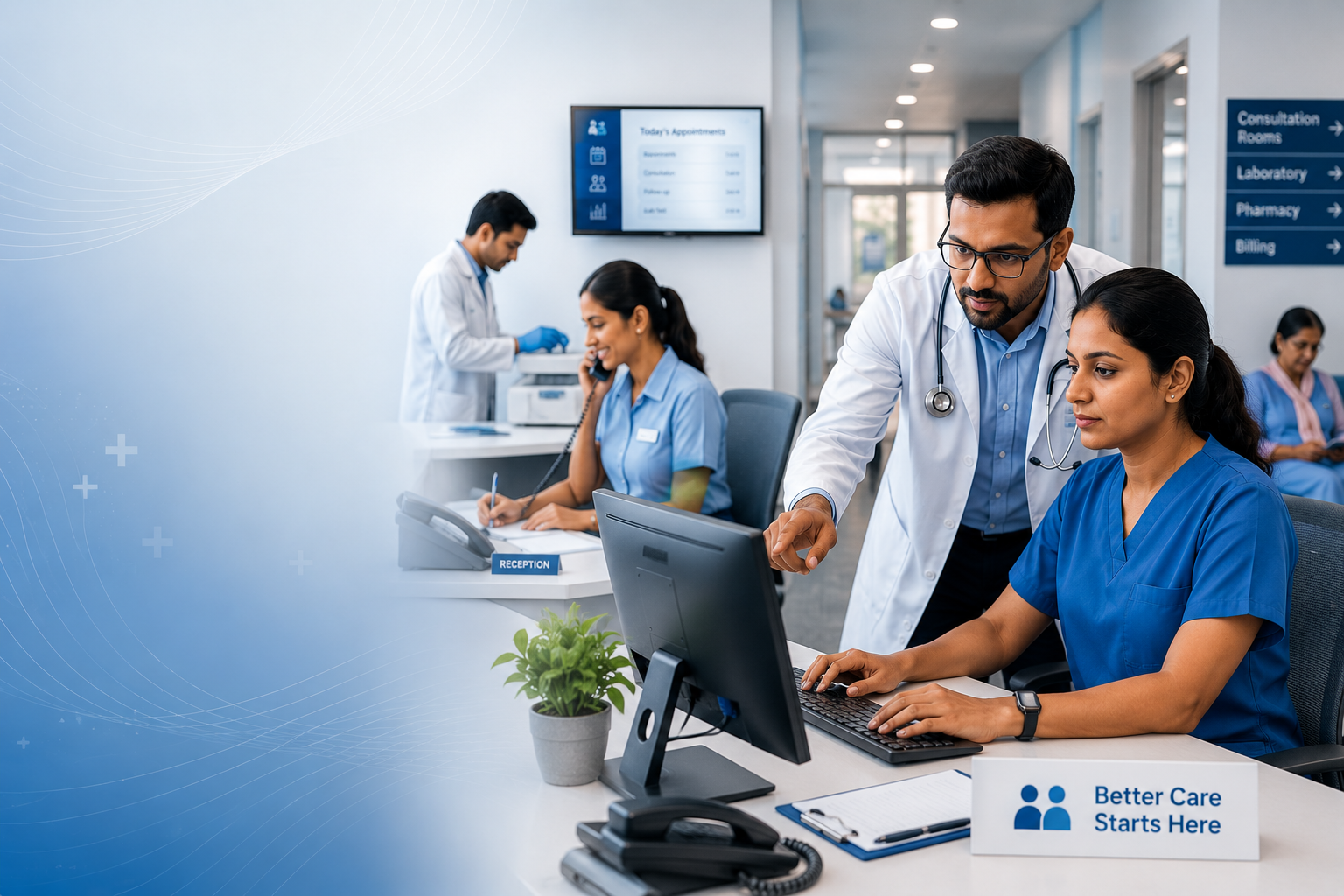
Behind every line in a hospital information system is a person under pressure. The doctor moving between back-to-back consultations. The receptionist holding the appointment book together. The lab technician clearing urgent diagnostics. The patient in the waiting room, anxious and short on information.
When software ignores that human layer, it doesn’t just underperform — it adds friction. Another login. Another screen. Another step that someone has to remember at the worst possible moment. Good clinic management software should do the opposite: remove steps, not invent them.
Patients now judge the experience, not just the outcome
Modern patients evaluate care the way they evaluate everything else — on whether it felt connected, accessible, and fast. A correct diagnosis delivered through a confusing, slow, opaque process still feels like poor care to the person receiving it.
That shift is exactly why demand for hospital management software, EMR systems, and patient engagement platforms keeps rising across India and the Gulf. Organizations aren’t really buying software anymore. They’re buying operational clarity — the ability to know what’s happening, where, and what to do next, without three people chasing it down.
What human-centered design actually means
At HODO, the goal has never been to digitize a hospital for the sake of digitizing it. The goal is to improve how the place actually runs.
That’s the thinking behind HealzApp — a platform built to strengthen patient engagement and simplify the everyday operations of clinics and hospitals, rather than bury staff under another complex tool. The test for any feature is simple: does it reduce the load on the person using it, or add to it?
Because the healthcare industry doesn’t need more complicated platforms. It needs systems that make care delivery faster, simpler, and more connected — and that start from the people, not the feature list.