

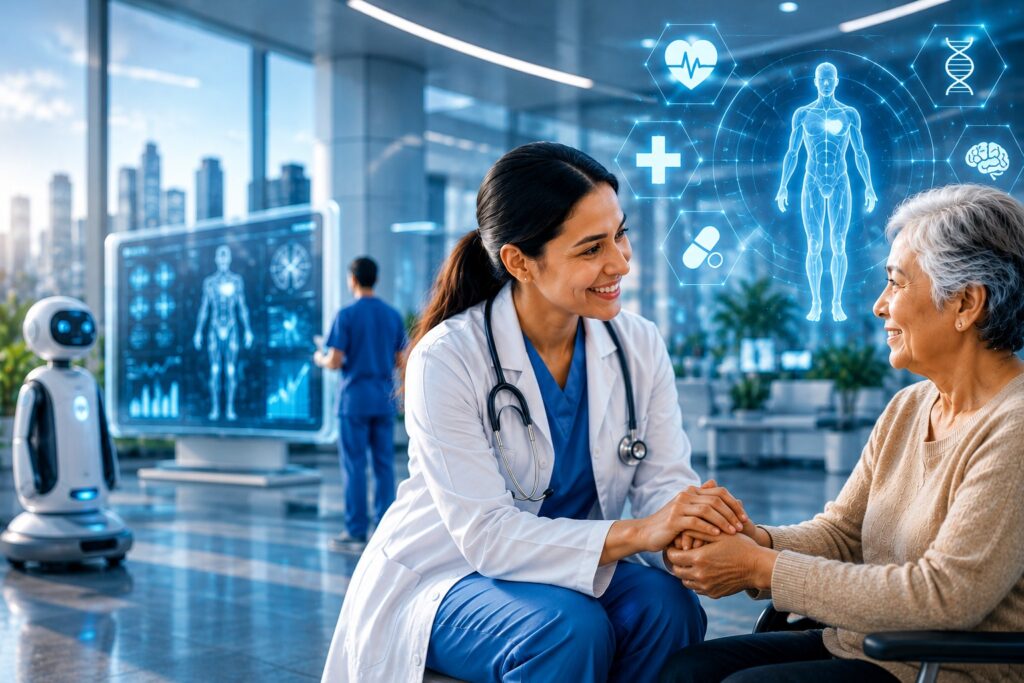
Healthcare was never built to move at the speed it moves today. Yet hospitals, clinics, and the people inside them are now expected to handle more patients, more data, and more complexity than ever — while patients expect an experience that feels fast, connected, and transparent.
That makes modern healthcare more than a medical challenge. It’s an operational one, a communication one, and — most of all — a human one. Even excellent clinical judgment gets slowed to a crawl by disconnected systems and inefficient workflows.
The shortage isn’t intelligence
We spend a lot of time worrying about whether AI will replace people in healthcare. Watch how real systems operate, though, and the bigger problem looks different. Healthcare doesn’t suffer from a shortage of intelligence. It suffers from a shortage of connection.
The same gaps repeat across hospitals everywhere: patients repeating their information again and again, doctors losing hours to documentation, staff under constant coordination pressure, and people leaving an appointment feeling processed rather than cared for. Those aren’t isolated faults. They’re symptoms of systems never designed for today’s scale.
Technology should give time back
Used well, technology’s best gift to healthcare isn’t speed for its own sake — it’s attention. When connected systems handle workflow, communication, and routine coordination, they hand time back to the people delivering care. The administrative load drops. Clinical decisions get supported by better information. Risks surface earlier.
But that’s the means, not the end. Reducing friction only matters because of what it makes room for.
Empathy stays at the center
A patient is never just a report or a result. Behind every diagnosis there’s fear, uncertainty, family pressure, and trust placed in a stranger on one of the hardest days of someone’s life. No amount of automation changes that.
So the future of healthcare won’t belong to whoever has the most advanced technology. It will belong to organizations that combine clinical expertise, operational efficiency, digital intelligence, and genuine human empathy into one connected experience.
That belief shapes how HODO approaches its work. Through HealzApp and LabzApp, the goal isn’t only smoother workflows — it’s healthcare that feels more connected and accessible for providers and patients alike. The real aim was never to build smarter hospitals. It was to build places where patients feel understood, supported, safe, and valued.
Technology will keep transforming healthcare. Empathy will stay its foundation